The Complete History of HVAC: From Ancient Fires to Smart Homes

The Complete History of HVAC: From Ancient Fires to Smart Homes
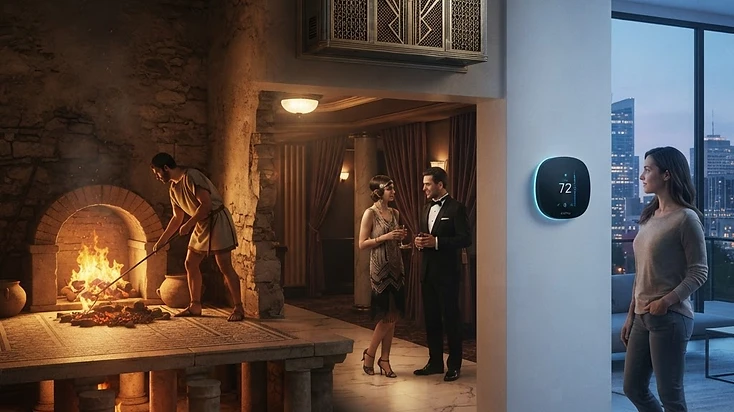
Heating, cooling, and the air we breathe indoors — the story of HVAC is the story of human comfort, survival, and progress. For thousands of years we struggled against the weather. In barely a century, we mastered it.
This is the complete, plain-English timeline of how humanity learned to control indoor climate. It's the anchor piece for our HVAC History series — read it straight through, or jump to the era that interests you.
The big picture
| Era | What changed | |---|---| | Prehistory–1800s | Fire, hypocausts, stoves, and steam — we learned to heat | | 1902 | Willis Carrier invents modern air conditioning | | 1920s–40s | AC goes public: movie theaters, department stores | | 1945–1980 | Residential AC remakes where and how America lives | | 1970s–90s | Efficiency standards, heat pumps, and digital controls | | 2000s–today | Smart thermostats, inverter tech, cold-climate heat pumps | | Now | Decarbonization, electrification, grid-interactive homes |
Why this history matters to homeowners
HVAC is the single biggest energy user in most homes. The choices we make about equipment — furnace vs. heat pump, single-stage vs. inverter, programmable vs. smart — all trace back to breakthroughs made decades ago. Understanding that lineage helps you buy smarter, maintain better, and avoid the mistakes each generation of technology was invented to fix.
Before the thermostat
For most of human history, "heating" meant tending a fire. The Romans built the first real heating system — the hypocaust — which channeled furnace exhaust under floors and into walls to warm bathhouses and villas. After Rome fell, we largely forgot the trick for a thousand years and went back to open hearths and smoky rooms.
The real leap came in the 1700s and 1800s: cast-iron stoves, steam radiators, and eventually the first forced-air furnaces. Read the full story in Before the Thermostat: 5,000 Years of Keeping Warm.
The invention of air conditioning
On a humid July day in 1902, a 25-year-old engineer named Willis Carrier was trying to solve a printing problem — not a comfort problem. Ink wouldn't dry straight at a Brooklyn printer. His solution — a system that controlled both temperature and humidity — became modern air conditioning. See 1902: How Willis Carrier Invented Modern Air Conditioning.
AC remakes America
After WWII, residential air conditioning went from luxury to expectation — and it changed everything: the Sun Belt exploded, summer productivity surged, and home design itself shifted. How Air Conditioning Remade America (1945–1980) covers the social revolution.
The digital turn
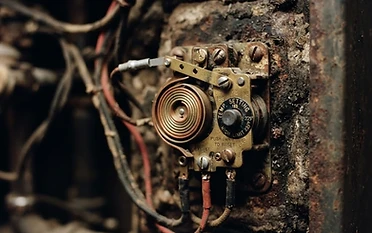
For 70 years the thermostat was a mercury switch you turned by hand. Then came programmable models, and in 2011, the Nest Learning Thermostat — the moment HVAC joined the internet. From Mercury to Nest: The Digital HVAC Revolution traces it.
What's next
Today's story is electrification and decarbonization: cold-climate heat pumps that work below zero, grid-interactive homes that help balance the power network, and a slow goodbye to fossil-fuel heating. What's Next: Heat Pumps, Decarbonization, and the Connected Home looks ahead.
At Canopy HVAC, we work on the latest equipment every day — but we respect the century of innovation that got us here. If you're sizing a replacement, planning a heat-pump upgrade, or just want to understand what's in your basement, we're happy to talk it through. Call 303-931-7468.